New to shrimp?The 2-minute guide.
Everything I wish someone had told me before I paid five dollars for one shrimp. Read this, then go find a breeder.
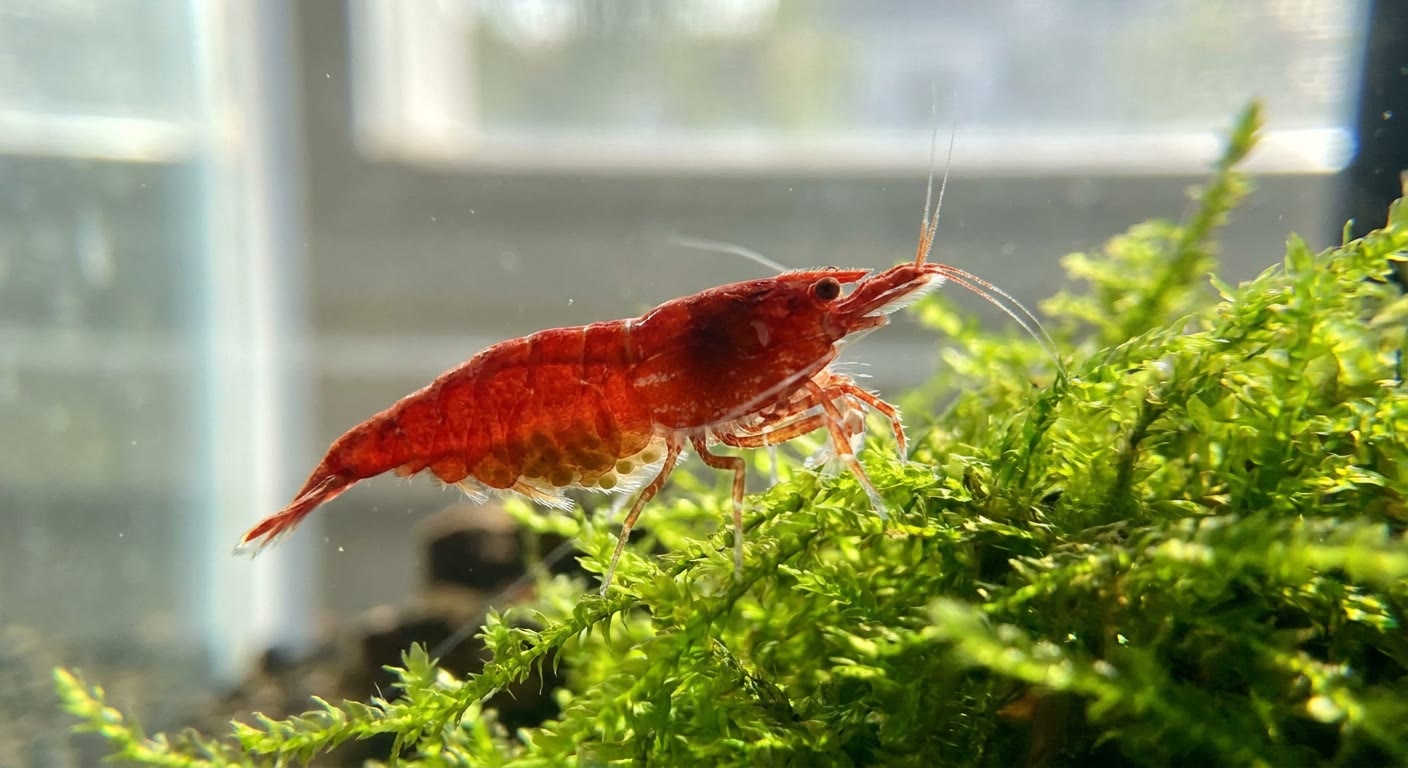
Neocaridina.
Cherry shrimp. Dwarf freshwater shrimp, about an inch long, that come in red, yellow, orange, blue, green and black. Same species, different colors, like chickens. They eat algae and leftover food, they don't bother anything, and if they're happy they breed on their own. A female carries 20 to 30 eggs under her tail for three weeks. That's the whole reason the price should crash.
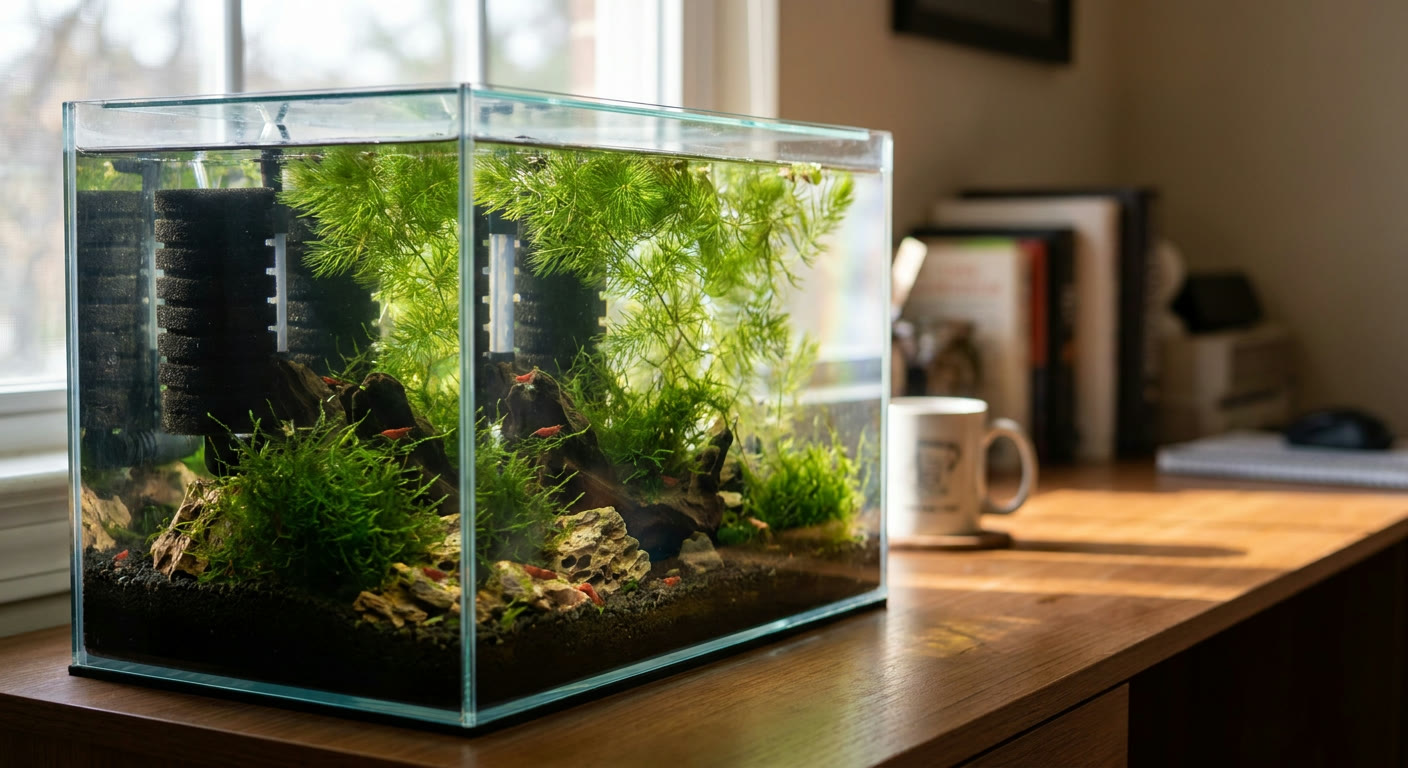
5 to 10 gallons.
Bigger is easier, not harder; a 10-gallon forgives mistakes. A sponge filter, a heater if your house goes below 68, a light, and something for them to climb on: moss, a leaf, a rock. No fish that fit a shrimp in their mouth. Babies are the size of a comma.
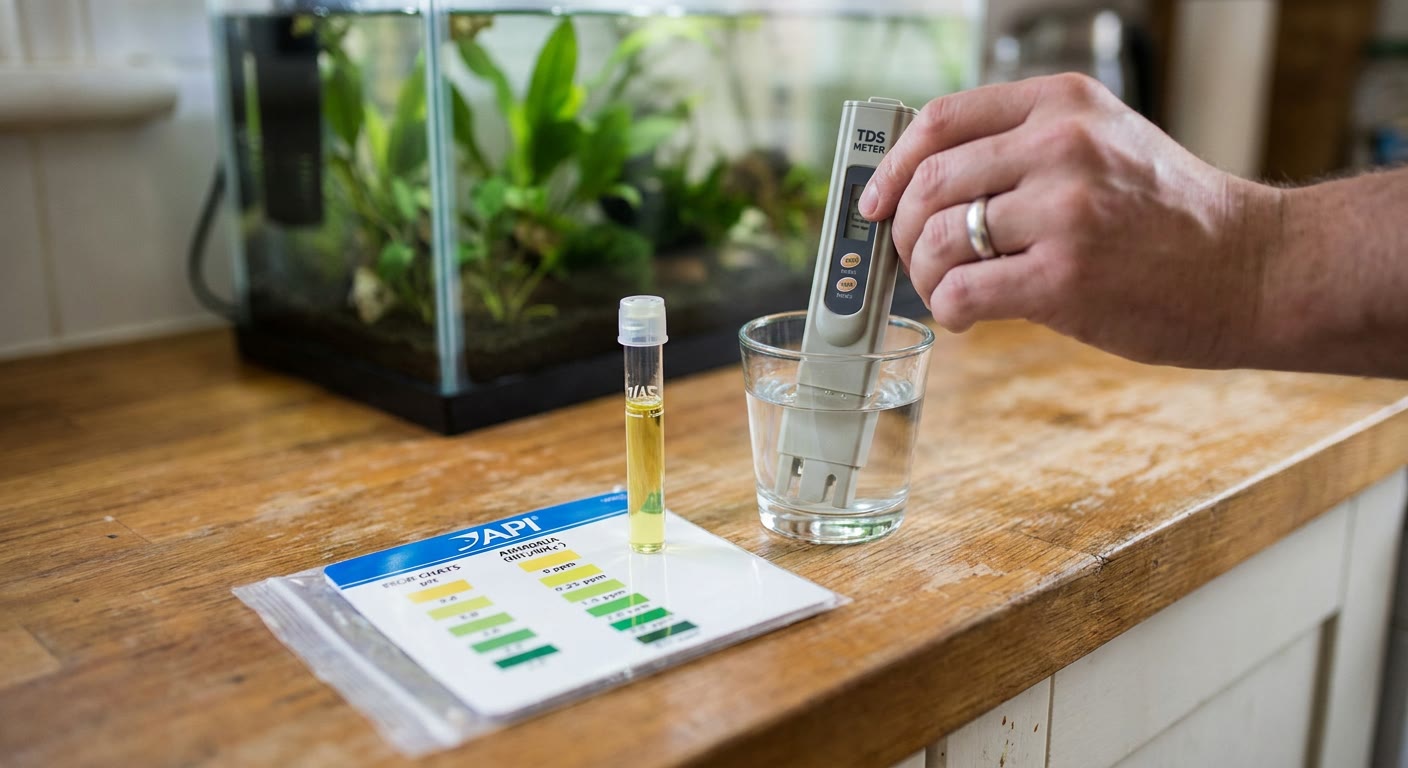
Tap is usually fine.
For Neocaridina, dechlorinated tap water works in most of the country. They like it a bit hard: GH 6–10, KH 2–6, pH 7–7.8, TDS 150–300, temp 68–78 °F. Ask the breeder for their numbers and match them. What matters more than any number is that it doesn't swing.
Caridina (crystal red, crystal black, taiwan bees) are the fussy cousins. They want soft acidic water, which means RO water remineralised on purpose and buffering substrate. Not a first tank. Start with Neos.
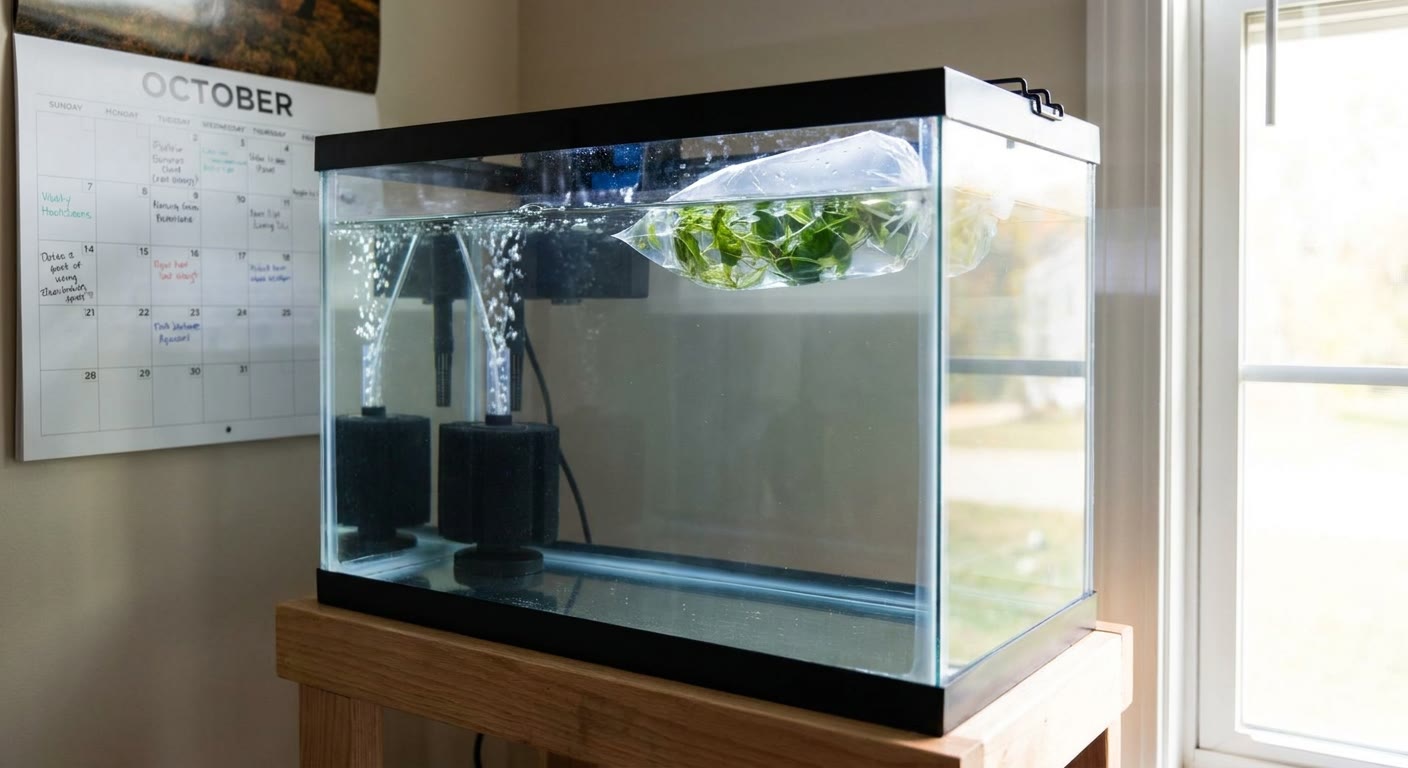
Wait before you buy.
A new tank has no bacteria to eat the ammonia yet. Run it with the filter going for 4 to 6 weeks, feed it a pinch of food every few days, and test until ammonia and nitrite read zero. Then get shrimp. Every rushed tank I've seen ends the same way. A cup of gunk from a running filter speeds it up a lot; ask the breeder for one.
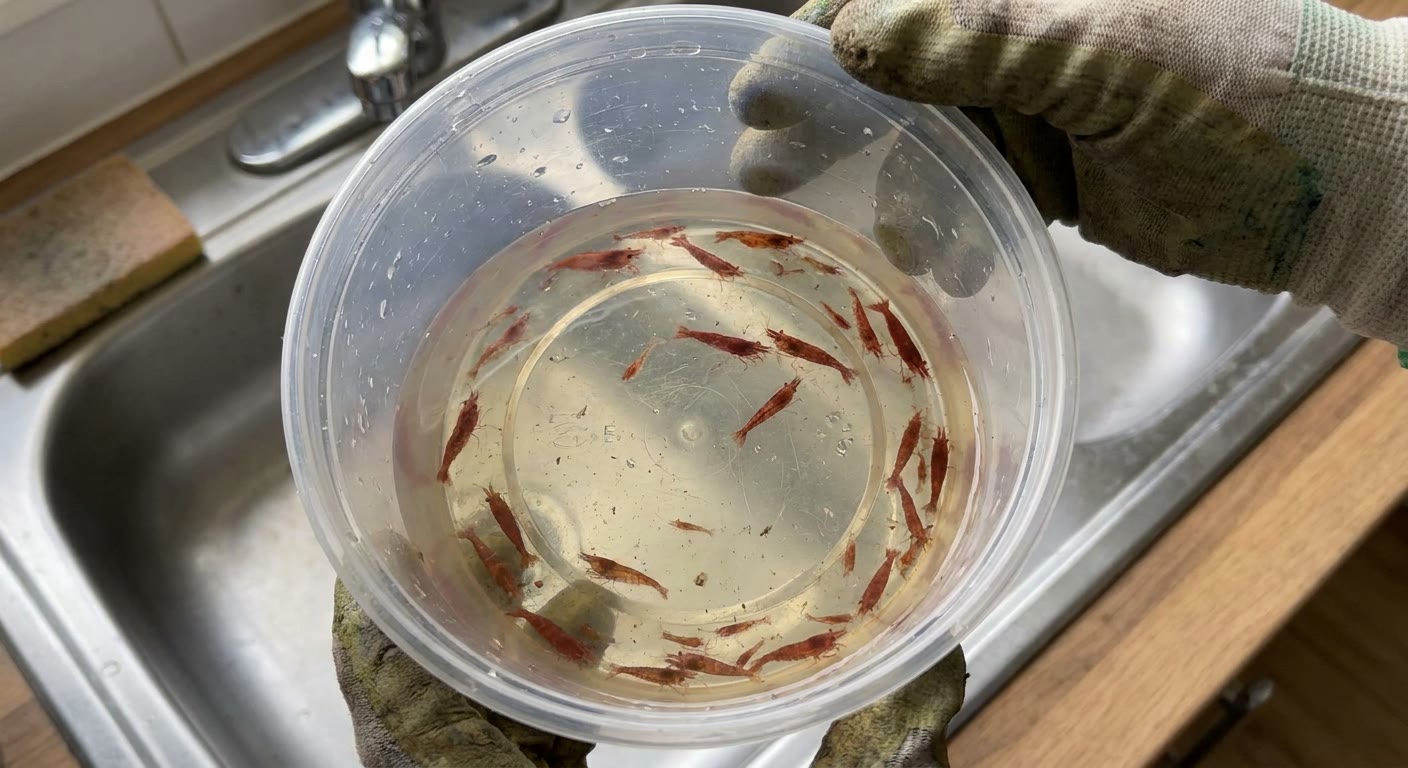
10 to 20 to start.
Enough for both sexes to be in there for sure. Mixed sizes are better than all adults. In three months you'll have more. In six you'll be on this site listing them.
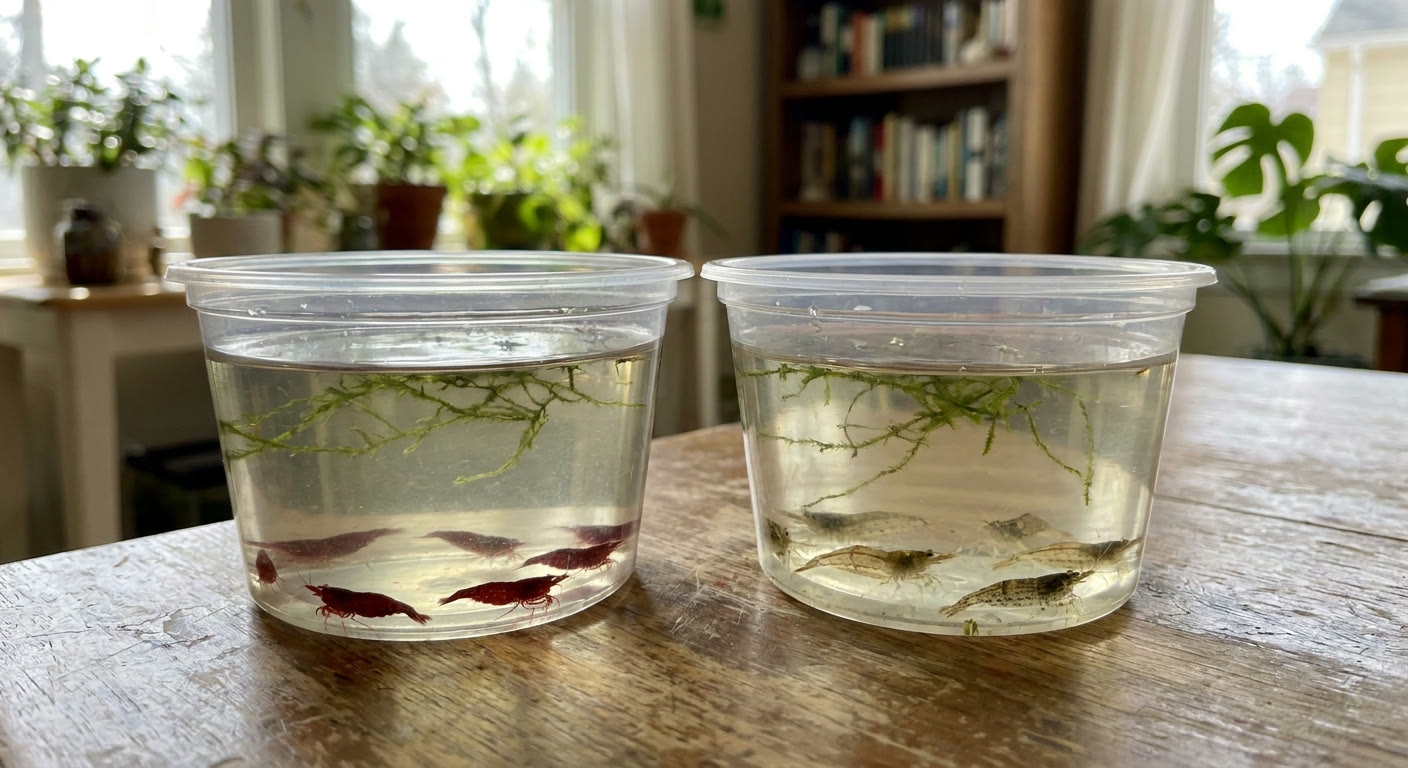
Culls are the deal.
Breeders sort by color. The deep reds stay in the breeding tank; the pale ones and the clear wild-type throwbacks are "culls". They're the same shrimp, same health, same breeding rate, just less paint. Most breeders on here give culls away. For a first tank, culls are the smart buy. Keepers are for when you want a color line.
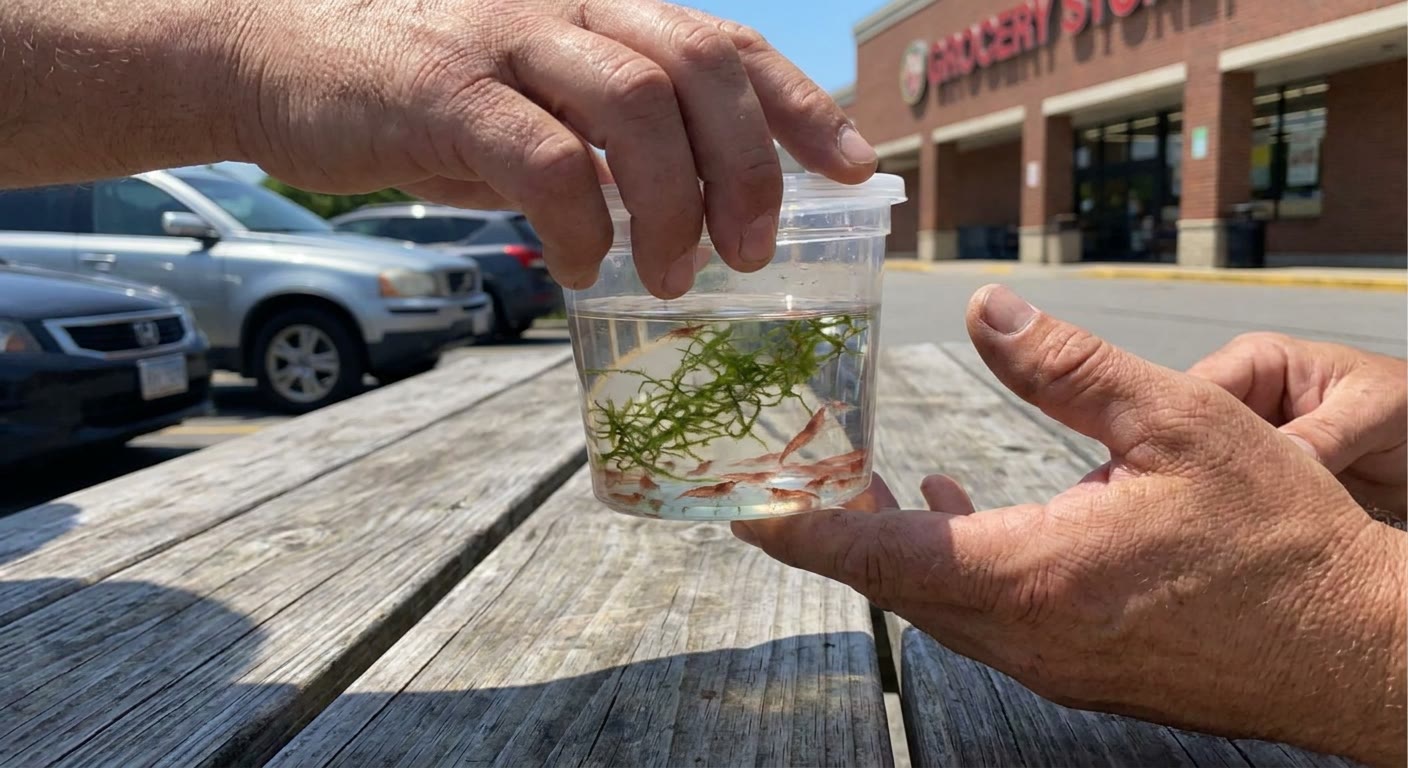
$1 or less. Free is normal.
The shop wants $5 to $8. A breeder with a tank that won't stop is glad to get 50 cents. Everyone who lists here pledges never to sell a Neocaridina for more than a dollar. If someone asks for more, they aren't part of the crash. Report it.
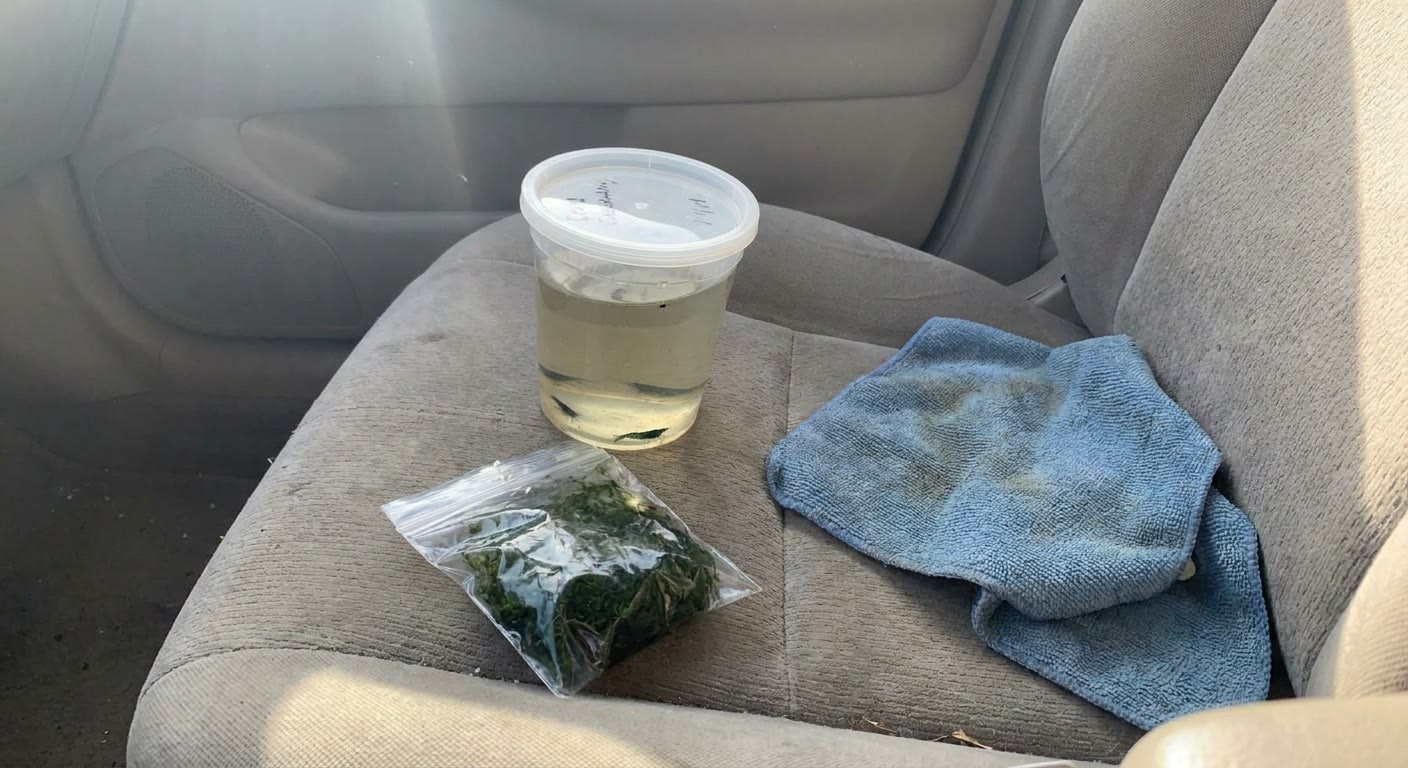
A cup and a lid.
- A container with a lid. A deli cup, a jar, a takeout tub. Half full of your tank water, or empty if the breeder bags them in theirs.
- A small piece of moss or a leaf so they have something to grip on the drive.
- Cash in small bills, or whatever you agreed to trade.
- Meet somewhere public. Don't leave them in a hot car.
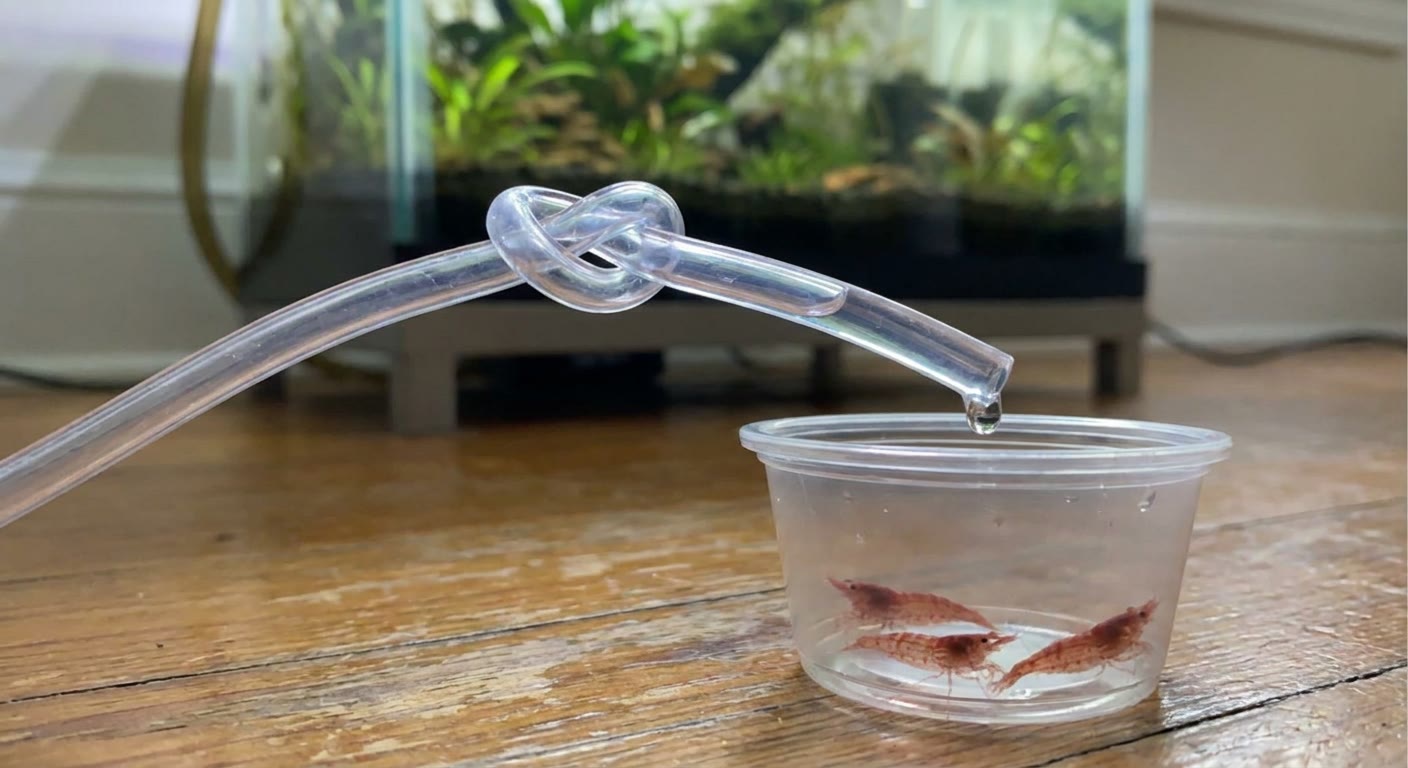
Drip for 30 minutes.
Float nothing. Put the shrimp and their water in a cup or bowl, then run a piece of airline tubing from your tank with a knot in it so it drips a couple of drops a second. When the volume has doubled, about 30 minutes, net the shrimp into the tank and throw the cup water out. Lights off the first evening. They'll hide, then they'll graze.
The six questions.
Every listing has a button that pastes these into a message for you.